
Pricing is based on a fixed-price system.
Prices are revised every Tuesday.
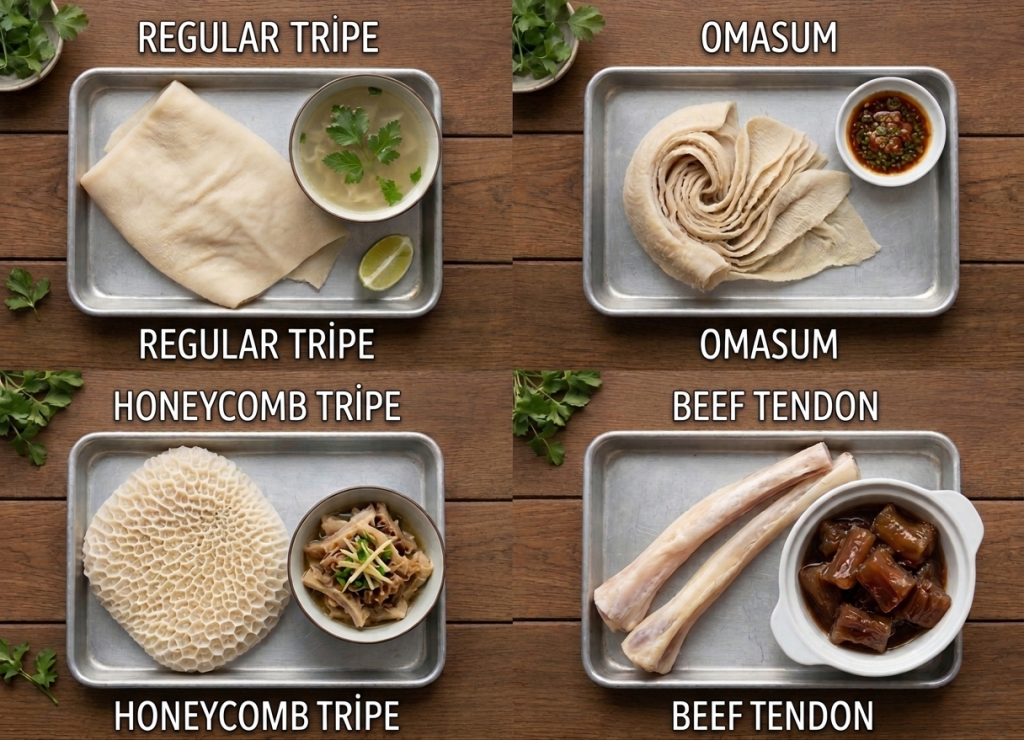
Terms and Definitions for Offals:
Regular Tripe: Refers to standard blanket tripe (from the first stomach compartment, the rumen). It has a flat, smooth surface texture and is commonly used in traditional soups and stews.
Omasum: The third stomach compartment of ruminants (cattle, sheep, etc.). It consists of thin, leaf-like folds of tissue layered together, which is why it is often referred to as “book tripe” or “leaf tripe.”
Honeycomb Tripe: Tripe from the second stomach compartment (the reticulum). It gets its name from its distinct honeycomb-patterned surface. It is tender, highly flavorful, and considered one of the most preferred types of tripe in culinary dishes.
Beef Tendon: Not a stomach lining, but tough connective tissue that attaches beef muscle to bone (often taken from the lower leg or heel). When slow-cooked, it turns gelatinous, soft, and rich, and is widely used in Asian soups, stews, and hot pots.
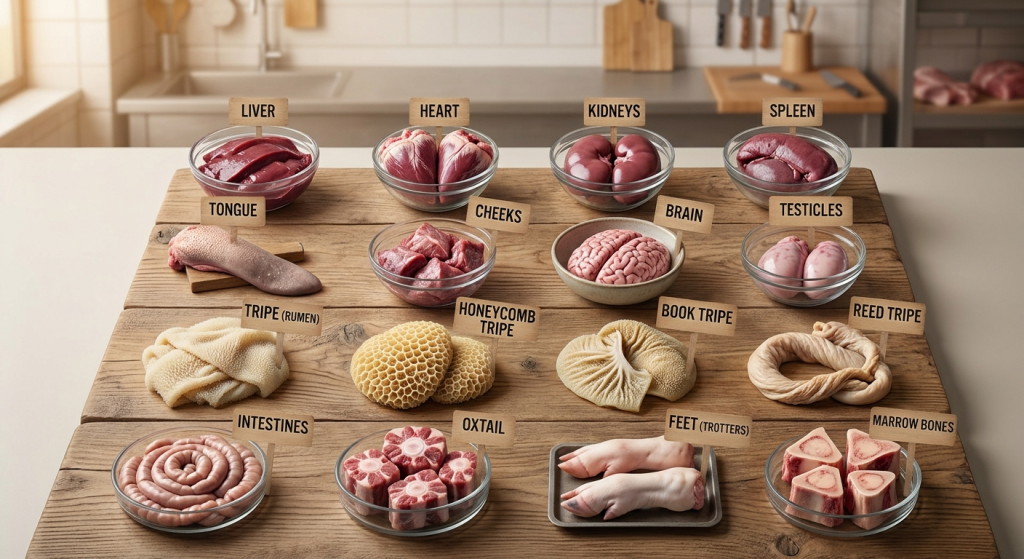
1. Red Offal (Viscera / Blood-Rich Organs)
Liver (Karaciğer): One of the most popular and nutrient-dense organs; usually sautéed, grilled, or skewered.
Lungs (Akciğer / Miltan): Often used in traditional offal soups, pet food, or fresh stir-fry mixtures.
Heart (Yürek): Lean, muscular, and flavorful; typically sautéed or grilled.
Kidneys (Böbrekler): Trimmed of surrounding fat and sautéed.
Tongue (Dil): Boiled, sliced, and served cold (söğüş), or cured/smoked.
Spleen (Dalak): Traditionally stuffed or pan-fried.
Cheek / Beef Cheek (Yanak): Facial muscle rich in collagen; best braised or slow-cooked in stews.
Testicles / Rocky Mountain Oysters (Koçyumurtası / Hayalar): Usually grilled or pan-fried.
2. White Offal (Stomach Compartments & Intestines)
Cattle stomachs consist of four distinct chambers, each known by specific culinary names:
Tripe / Rumen (İşkembe): The largest stomach compartment; widely used for tripe soup (işkembe çorbası) and stuffed dishes.
Honeycomb Tripe / Reticulum (Börkenek): The second stomach chamber, recognized by its honeycomb pattern.
Book Tripe / Omasum (Kırkbayır): The third chamber, consisting of thin, leaf-like layers; cleaned and used in soups or stews.
Abomasum / Reed Tripe (Şirden): The fourth (true) stomach chamber; famous in Turkish cuisine for şirden dolması (stuffed abomasum).
Intestines (Small & Large) (Bağırsak): Used to make kokoreç, mumbar (stuffed intestines), or natural sausage casings.
Sweetbreads (Uykuluk): Thymus or pancreatic glands (more common and tender in calves/veal).
Bladder (Billur / İdrar Kesesi): Cleaned and processed for specialized uses or casings.
3. Other Structural Offal & Secondary Cuts
Collagen-rich, gelatinous, or bony cuts collected during complete processing:
Head / Head Meat (Kelle):
Brain (Beyin): Boiled for salads or breaded and fried.
Head Meat (Kelle Eti): Slow-cooked for head-and-trotter soup (kelle-paça).
Eyes (Göz): Occasionally used in specific regional broths or stews.
Trotters / Feet (Paça / Ayaklar): Packed with collagen; essential for trotter soup (paça çorbası) and broths.
Oxtail (Pöç / Kuyruk): Gelatinous and flavorful bone-in tail sections; ideal for braising and slow roasting.
Marrow / Spinal Cord (İlik / Omurilik): Bone marrow is baked or extracted to enrich soups and sauces.
Trachea / Windpipe Cartilage (Şıngıldak / Boğaz Kıkırdağı): Used in broths or processed meat products.